Clue
Biowink GmbH
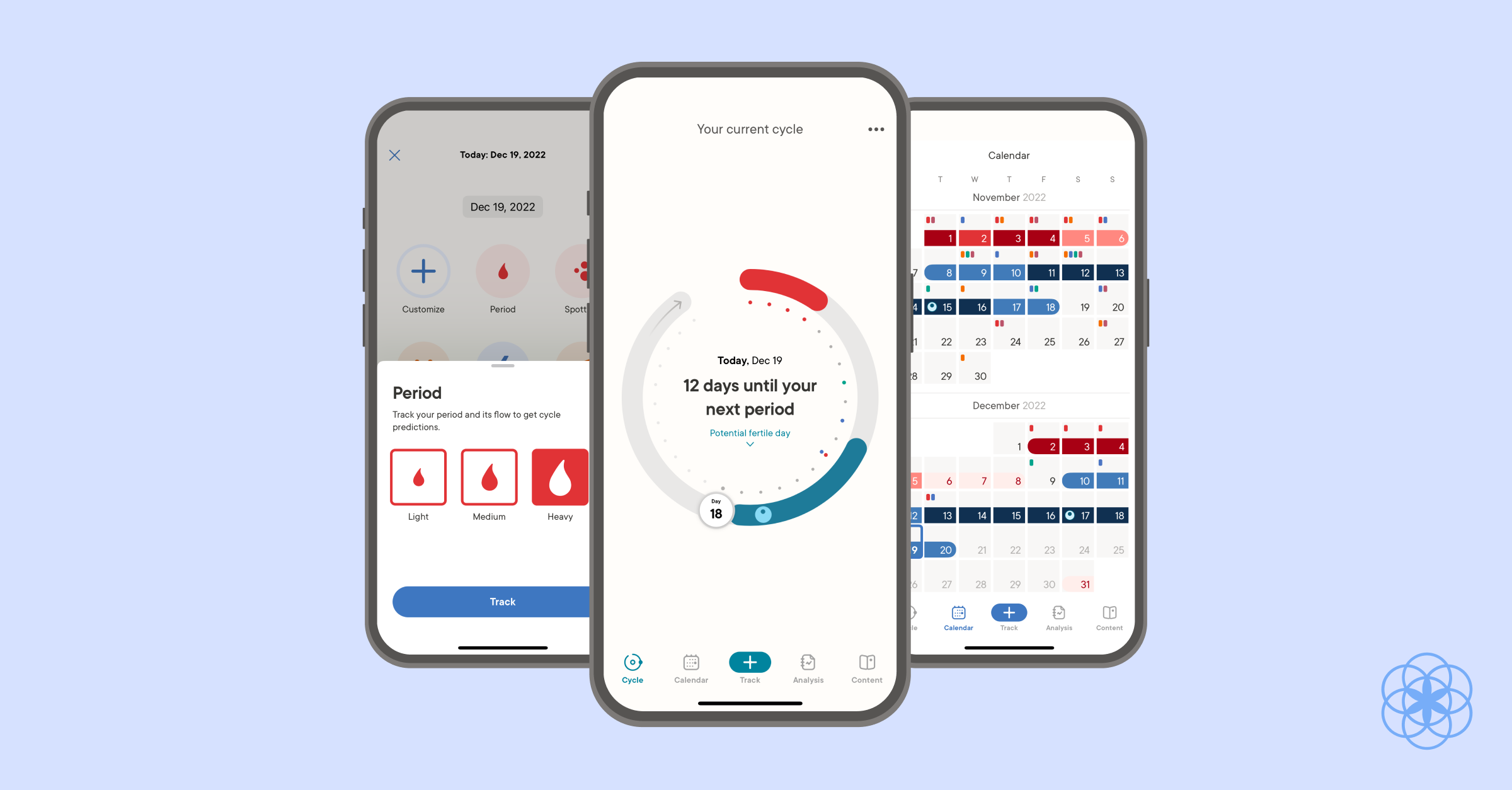
MedicalA science-based, data-driven menstrual and reproductive health app that helps users track their period, ovulation, and overall cycle health. Trusted by 10 million users globally, Clue offers cycle predictions, fertility tracking, and insights into menstrual health across iOS, Android, and watchOS.
This scorecard presents findings from our independent evaluation based on publicly available information. It is intended to inform, not to recommend or discourage use of any product.
Strengths
- Highly specific and transparent privacy policy naming all third-party processors with clear purposes (Privacy Policy, https://helloclue.com/privacy)
- Strong commitment to data non-commercialization: 'we have never and will never sell data to third parties or disclose your data to any authority, under any circumstances' (Privacy Policy)
- Health data protection in research partnerships: 'at no point does the Partner ever receive any of your tracked health data' with de-identification and random ID assignment (Privacy Policy)
- EU data residency and encryption: 'All of our data is securely stored on servers located in the European Union' with 'All data stored with AWS is encrypted by Clue' (Privacy Policy)
- CE-marked as Class 1 medical-grade device (2023), indicating regulatory compliance with medical device standards (About page)
- GDPR compliance explicitly stated with legal basis documentation (Art. 6b and Art. 9 Sec. 2 lit a) (Privacy Policy)
- User control over research data sharing: 'You can toggle this off at any time' (Privacy Policy)
- Braze compliance with EU-US Data Privacy Framework and Standard Contractual Clauses for international data transfers (Privacy Policy)
- Minimal data collection focused on essential categories: account, usage, and health data (Privacy Policy)
- Payment and FSA/HSA handling outsourced to prevent Clue data access: 'Clue does not store your payment information at any time' (Terms of Service)
Concerns
- No evidence of SOC 2, ISO 27001, or HIPAA compliance certifications despite medical-grade classification (security infrastructure gap)
- MFA (multi-factor authentication) not mentioned in available sources, which is standard for health apps handling sensitive data
- Data export functionality not explicitly described in provided sources, limiting user data portability verification
- Data deletion timeline not specified ('deleted...as soon as it is no longer required' is vague regarding actual timeframes) (Privacy Policy)
- Essential service provider Braze cannot be fully opted out of, limiting user control ('It is not possible to opt-out of Braze as it is an essential tool') (Privacy Policy)
- Full content of Roe v. Wade response and Co-CEO data privacy statement not provided in sources, limiting verification of company's specific privacy commitments during sensitive regulatory contexts
- Wearables partners list referenced but not comprehensively named in provided documentation ('A list of our Wearables Partners can be found on our webpage') (Privacy Policy)
- Research partner list described generically as 'carefully selected research partners' from institutions like Berkeley, MIT, 4M without comprehensive naming of all partners (Clinical Studies page)
- Usage data collection (device, browser, IP) for analytics purposes may be broader than strictly necessary for core health tracking functionality
What We Couldn't Find
- SOC 2, ISO 27001, or HIPAA compliance certifications - expected for medical-grade health app but not documented in provided sources Multi-factor authentication (MFA) support - standard security feature not mentioned in available documentation Data export/portability functionality - expected under GDPR and user rights but not explicitly described in Privacy Policy excerpt Specific data deletion timelines - Privacy Policy states deletion occurs when 'no longer required' but no specific timeframes documented Complete list of wearables partners - referenced as available on website but not named in provided sources Complete list of research partners beyond named institutions - Privacy Policy references 'carefully selected' partners without comprehensive listing Full text of Roe v. Wade response statement and Co-CEO data privacy statement - referenced but content not provided for evaluation App store data safety labels - platforms (Apple App Store, Google Play) listed but specific data safety label documentation not provided Incident response and breach notification procedures - expected security practice but not documented in available sources Third-party security audits or penetration testing results - expected for medical devices but not mentioned in provided sources
Strengths
- CE-marked Class 1 medical-grade device classification (website, About page, 2023) - appropriate regulatory recognition
- Multiple substantive research partnerships with top institutions: UC Berkeley, University of Exeter, Oxford, Kinsey Institute, Bill & Melinda Gates Foundation (Clinical Studies page, About page) - demonstrates institutional credibility
- Explicit and comprehensive liability disclaimers regarding prediction accuracy in Terms of Service ('We give no guarantee...events in your individual menstrual cycle will be correctly predicted') - honest about limitations
- Clear non-medical positioning: 'Clue is designed to provide general information' and 'self-management app' (Terms) - appropriate framing
- Planned research on under-researched conditions (endometriosis, PMDD, ADHD interactions) (Clinical Studies page) - addresses genuine health gaps
- De-identification protocols for research data sharing described in detail (Privacy Policy, Clinical Studies page) - transparency on data usage
Concerns
- No peer-reviewed publications with DOIs, journal names, or sample sizes provided despite claims of research collaborations (Clinical Studies page references partnerships but no published citations available in sources)
- Lack of independent third-party accuracy reviews or app store review data (no accuracy validation from external sources)
- Contradiction between marketing claim '#1 doctor-recommended free period tracker' and absence of validation evidence (website claims vs. evidence gap)
- FDA approval reference unclear: 'Clue Birth Control gets FDA approval' (2021) appears separate from core app; unclear if core Clue app has FDA clearance vs. only CE marking (About page)
- No specific accuracy rate percentages or metrics provided (website lacks quantitative accuracy claims)
- Research partnership descriptions vague on relationship scope: partnerships are mentioned but nature of collaboration (data sharing, co-authored studies, funding direction) not always specified (Clinical Studies page)
- Disclaimer 'We give no guarantee...cycle will be correctly predicted' directly contradicts user testimonial 'almost scary with how accurate it is' and marketing positioning (Terms vs. marketing materials tension)
What We Couldn't Find
- Specific published peer-reviewed studies with DOIs and journal citations (expected for 'science-based' product with research partnerships; Clinical Studies page mentions collaborations but provides no publication list) Sample sizes, study designs (RCT vs. observational), and peer-review status for referenced research (expected for medical device claiming research validation) Independent third-party accuracy reviews or validation studies (expected for medical device; none found despite Wired article reference in source list) App store review data for accuracy assessment (expected source for user-reported accuracy; not provided) FDA clearance/approval numbers for core Clue app (expected for product classified as medical; only CE marking documented, FDA approval mentioned only for separate 'Clue Birth Control' feature) Specific accuracy metrics or prediction success rates (expected for product marketing 'accuracy' in user testimonials; no quantitative data provided) Detailed nature of research partnerships (exclusive vs. collaborative, funding direction, publication ownership) (expected for transparency about research relationships) Clinical validation pathway documentation or regulatory submission details (expected for CE Class 1 medical device; no regulatory dossier or submission details provided)
Strengths
- Female-founded (2012) and female-led organization with sustained 12+ year commitment to women's health sector (About Team page)
- Exceptionally specific, actionable mission tied to measurable research outcomes (closing diagnosis gaps for endometriosis, PMDD, PCOS) rather than generic empowerment rhetoric (About page, Clinical Studies page)
- Extensive thought leadership pipeline: published encyclopedia with clinician-authored articles, Hormonal podcast, clinical webinars, multiple peer-reviewed research collaborations with top institutions (About page, Clinical Studies page)
- Strong inclusivity commitments embedded in product design: 20+ languages, dedicated LGBTQIA+ content section, accessibility-focused design considering 'gender, age, race, ethnicity, accessibility, education, country of origin, socioeconomic status' (About page, Articles section)
- Marketing messaging strongly aligned with privacy-first values and evidence-based positioning; repeated commitment 'we will never sell data to third parties' suggests leadership prioritizes user trust over monetization (Website, About page)
- Leadership transparency through authored pieces (Ida Tin, Audrey Tsang, Carrie Walter) on company philosophy and data handling (About page)
- Multiple life-stage product features (Conceive, Pregnancy, Perimenopause, No Period) demonstrate design for diverse user populations beyond general fertility tracking (About page, Terms)
Concerns
- No formal, documented advisory board visible in available sources despite company being CE-marked Class 1 medical device; advisory structure with named experts in women's health, bioethics, clinical research, and regulatory affairs would be expected (missing from About Team page)
- Research partnerships described as collaborations but no comprehensive named list of specific advisors/board members from partner institutions (UC Berkeley, Oxford, Exeter, 4M consortium) with their credentials (Clinical Studies page)
- Full content of significant statements referenced but not provided in sources, e.g., 'Clue's response to Roe vs Wade' article and 'Patient Data Privacy at Clue' Co-CEO statement mentioned but text not included (Security track record notes)
- No published peer-reviewed papers visible in provided sources, though collaborations with top institutions are mentioned; specific journal names, DOIs, or publication status not documented (Clinical Studies page, About page)
- Previous CEO transitions (Audrey Tsang to sole CEO 2023, then Rhiannon White 2024) not explicitly explained in materials; succession rationale not documented (About page)
What We Couldn't Find
- Formal advisory board structure with named advisors, their credentials, and areas of expertise in women's health, bioethics, clinical research, or regulatory affairs (expected for CE-marked Class 1 medical device; not found on About Team page or website) Comprehensive named list of advisors or board members from research partner institutions (UC Berkeley, Oxford, Exeter, 4M consortium) (referenced but not fully named on Clinical Studies/About pages) Full text of significant company statements referenced: 'Clue's response to Roe vs Wade' and 'Patient Data Privacy at Clue: A statement from the Co-CEOs' (mentioned but content not provided) Published peer-reviewed papers with DOIs, journal names, sample sizes, study designs, and peer review status from research collaborations (Clinical Studies page references collaborations but no publication details) Specific reasons for CEO transitions (Audrey Tsang to sole CEO 2023, then Rhiannon White 2024) and leadership planning narrative (About page timeline provided but rationale not explained) Social media presence and engagement metrics (not provided in available sources) Specific names and credentials of 'carefully selected research partners' beyond institutional affiliations (Clinical Studies page mentions 'researchers from institutions like Berkeley, 4M, MIT' but not individual advisor names)
Strengths
- Strong multilingual support (20+ languages) with specific 2023 additions of Norwegian, Thai, Vietnamese - supports global accessibility (About page, equity_evidence_language_options)
- Explicit LGBTQ+ inclusion with dedicated article section and documented gender-neutral translation approach ('Internationally inclusive' article) - signals cultural inclusivity (equity_evidence_lgbtq_cultural)
- Free tier ('Clue Basic') with essential usable features removes baseline financial barrier while supporting freemium model (equity_evidence_pricing_cost)
- Comprehensive product design for diverse life stages and health conditions: Trying to Conceive, Pregnancy, Perimenopause, No Period modes; 21 health conditions in My Health Record including PCOS, endometriosis, PMDD (equity_evidence_product_design_diversity, Clinical Studies page)
- FSA/HSA reimbursement option enables payment flexibility for qualified US users (equity_evidence_pricing_cost, Terms of Service)
- Strong research partnerships with leading institutions (UC Berkeley, Oxford, MIT, Bill & Melinda Gates Foundation) focused on closing diagnosis gaps for under-researched conditions (endometriosis, PMDD, PCOS) - demonstrates commitment to advancing health equity (equity_evidence_community_programs, Clinical Studies page)
- Stated design philosophy explicitly addresses equity considerations: 'taking into account gender, age, race, ethnicity, accessibility, education, country of origin, socioeconomic status' (equity_evidence_product_design_diversity, About page)
- Female-founded and female-led company with 85% female crowdfunding investors (2023) - demonstrates alignment with audience representation (foundation_evidence_leadership_team)
Concerns
- No evidence of Medicaid coverage for Clue Plus despite being CE-marked Class 1 medical device with global reach - limits accessibility for low-income US populations (equity_evidence_pricing_cost)
- No documented sliding scale pricing, student discounts, or explicit financial assistance programs for users unable to afford Clue Plus (equity_evidence_pricing_cost)
- Limited user testimonials and reviews from diverse populations in provided sources - only one named user review (Esther Mungai) despite claims of serving 10 million users globally (equity_evidence_product_design_diversity, accuracy_evidence_app_store_reviews)
- No evidence of WCAG compliance testing, screen reader compatibility validation, or accessibility certifications for app despite being medical device - contradicts implicit promise of accessibility (accessibility_inclusive)
- Community partnerships documented are primarily research-focused with academic institutions rather than grassroots community health organizations serving vulnerable populations - may not reach underserved communities (equity_evidence_community_programs)
- Marketing materials and website imagery diversity not documented in provided sources - stated commitment to diversity representation not visually validated (diverse_representation)
- No evidence of accessibility user testing across disabled users despite article 'Disabled people have periods, too' - design for disabled users not validated beyond content acknowledgment (designed_diverse_users)
- 25% discount mentioned as 'Exclusive web offer' with holiday emoji suggests limited-time promotion rather than sustained affordability strategy (equity_evidence_pricing_cost)
- No information on device compatibility for older phones/operating systems that may be used by economically disadvantaged users - minimum requirements not specified (equity_evidence_device_requirements)
What We Couldn't Find
- No Medicaid coverage information despite US market presence and medical device classification - expected for medical device targeting reproductive health in US No documented sliding scale or income-based pricing despite serving global population with varying economic capacity - expected for medical device with equity mission No WCAG compliance certification or accessibility testing results despite 20+ language support - expected for accessible product claims No user testimonials or app store reviews from diverse demographic groups (disabled users, different races, ages, body sizes) - expected to validate diverse design claims No documentation of partnerships with community health organizations or underserved population programs - expected given equity emphasis No screen reader compatibility or assistive technology support documentation - expected for medical device with accessibility focus No device compatibility/minimum requirements specification - expected to determine access barriers for older devices/lower-income populations No published accessibility audit or accessibility statement/policy - expected for medical device claiming diverse user design No student discount or low-income pricing tiers - expected for company with stated socioeconomic equity commitment No user research data showing product validation across diverse body types, health conditions, or demographics - expected to support diverse design claims
How We Score
SAFE = Security, Accuracy, Foundation, Equity. Each 0–25, totaling 0–100.
Unified weighting (S 35%, A 35%, F 15%, E 15%). Minimum dimension thresholds apply.
Based on publicly available information: privacy policies, research, regulatory filings, and company websites.